It was at a conference in Johannesburg in 2017 that I came to the idea of preparing for a conference. I don’t mean getting your poster together and printing it, or making sure your talk hangs together in your PPT presentation. We all have to do that anyway. I am talking about preparing for a conference in a very different way. Let me tell you about a young woman I met last night at a conference I am attending right now.
So last night I see a small group of young black people standing off by themselves. I always make a point of talking to young students at conference, especially if I think they may be new to the conference, or first generation students. I went over to introduce myself, and found out that some of them were interns, and others were students. I asked what institution they were with, where they lived, what they thought of the conference… I was pleasantly surprised to hear from a young woman in the group that she had already met some of the people she had come to connect with. She named a few names, and explained why it was important for her to make these connections.
This young woman already knows what I only out cottoned on to at the conference in Johannesburg in 2017. She knew to come with a plan of who to network with, and why. She had looked at the conference programme, and scoped out who would be there, and had decided to make introductions accordingly.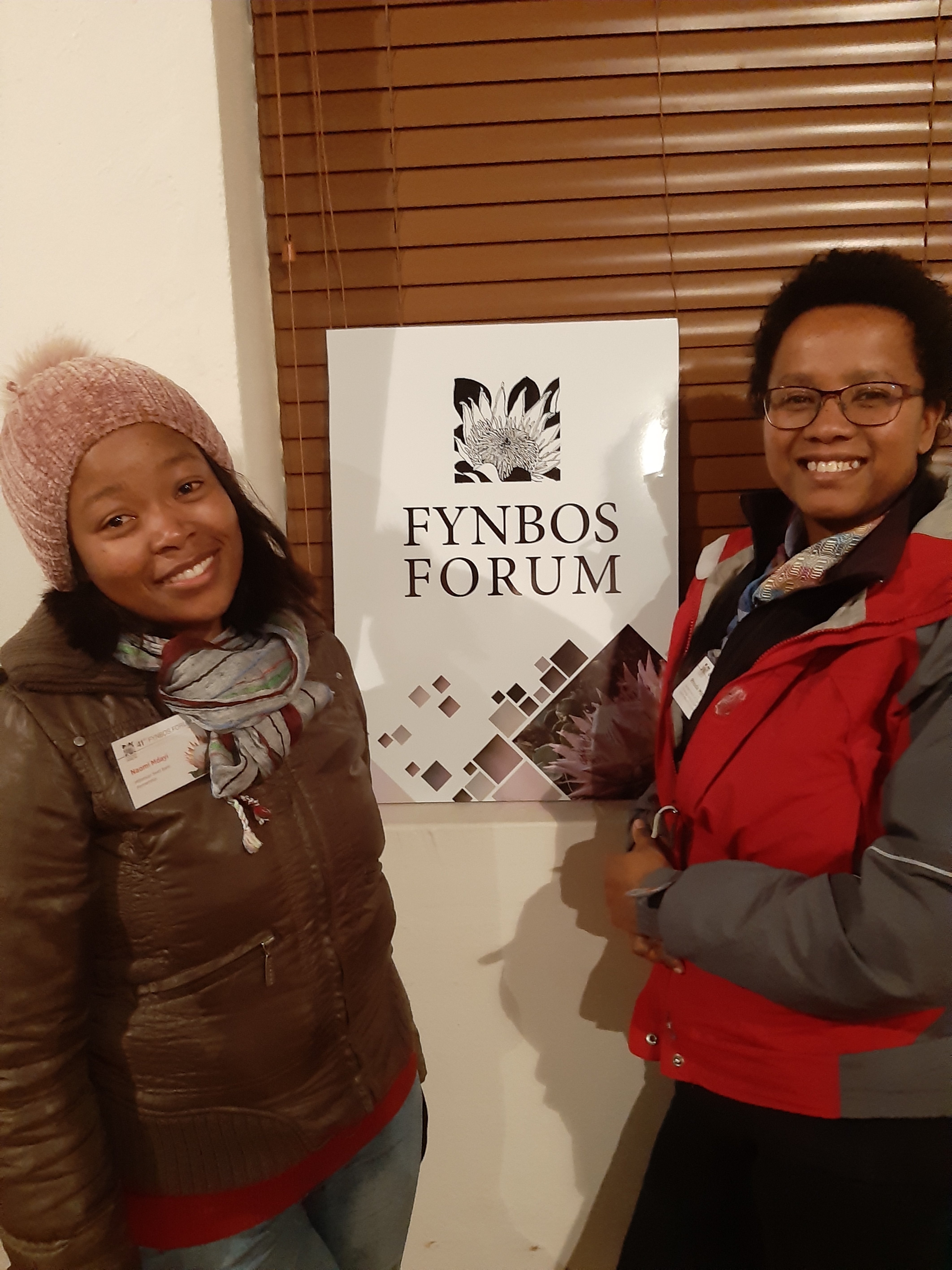
Naomi is a young conservationist at the South African Biodiversity Institute. We are pictured here at #FynbosForum2019
What I learnt at the 2017 conference was that my international colleagues had online profiles that all spoke to their academic interests. They had a Linked-In page, a Facebook page, a Twitter account and a website. I later learnt that some students in my environment, even at the undergraduate level, were creating professional profile based on their work. They were sharing small posts about their fieldwork, their methods, papers they were reading and conferences they were at. No rocket science – I have all these profiles. I just hadn’t thought of investing in them as part of my preparation for the conference, so that if a young woman wanted to meet to talk about common research interests, we’d have a base to start from.
So now, I know to try to update my profiles from time to time. The time at the airport, or an hour or two in the hotel room can be enough time to see who is on the programme, what they are talking about, and what their research is about. People often also advertise opportunities for postgraduate positions or vacancies in their research groups on their social media platforms. And there may be ideas and opportunities for collaboration around your own research interests that you can advance from your position at your own home university.
Note to self:
- Update social media profiles before a conference – better yet, maintain one or two key platforms with posts about work/research
- Consider postong on important research ideas our outputs; consider having an IG profile just for posting on teaching and learning, or research
- Find ways to connect people to my research through links and QR codes on posters or business cards
- Check out the profiles of speakers, presenters and other delegates to check out their research profiles and prepare for meeting them.
 The Small Things Fund